Showing posts with label homework. Show all posts

Tuesday, March 13, 2012

Director's Worksheet-- Due Week 11


 Complete, in DETAIL the following sheet (also available on ecompanion) and provide copies for the entire class ( 20 copies) Week 11.

If you email me your sheet by no later than 5 p.m. on Friday, March 16th I can print it for you

** In addition to the printed copy please include this worksheet in your final presentation post.


Director Worksheet

Name:
Year Born:
Country of Origin:
Background (education/upbringing):
First Feature
Most notable Films:
Major Influences:
Genre’s Explored:
Stylistic Tendencies:
Typical Content:
Awards & accolades:
Long-term collaborators:
Interesting facts/ etc:

Thursday, March 8, 2012

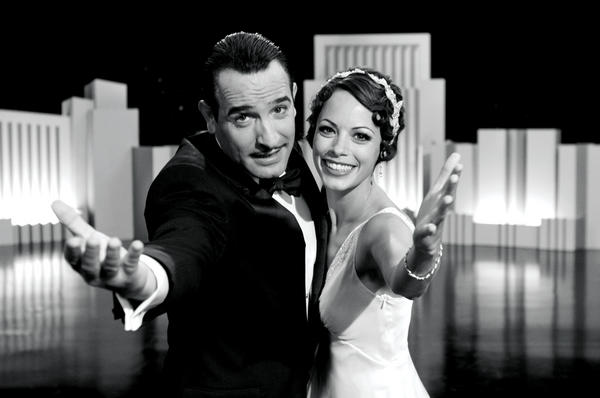
The Artist

Remember to include your 1-5 rating of The Artist in a blog post as well as a succinct paragraph articulating the style of the film ( see handout or blog post concerning this.)

Tuesday, March 6, 2012

Additional Tools for articulating Director’s Style


Additional Tools for articulating director’s style


Which of the adjectives listed below are descriptive of his or her style?

1.     Intellectual and rational or emotional and sensual?
2.     Calm and quiet or fast-paced and exciting?
3.     Polished and smooth or rough and crude-cut?
4.     Cool and objective or warm and subjective?
5.     Ordinary and trite or fresh, unique and original?
6.     Tightly structured, direct, concise or loosely structured and rambling?
7.     Truthful and realistic or romantic and idealized?
8.     Simple and straightforward or complex and indirect?
9.     Grave, serious, tragic and heavy or light, comical and humorous?
10. Restrained and understated?
11.  Logical and orderly or irrational and chaotic?

What common thematic thread is reflected in the director’s choice of subject matter? How is this thematic similarity revealed in the nature of conflicts he or she deals with?

In the films you’ve seen, what consistencies do you find in the director’s treatment of space and time?

How is the director’s style revealed by the following visual elements: composition and lighting, “philosophy of camera,” the nature of the camera movement, and methods of achieving three-dimensionality?

How does the director use special visual techniques (unusual camera angles, fast motion, distorting lenses and so on) to interpret or comment on the action and how do these techniques reflect his/her style?

How is the director’s style reflected in the different aspects of the editing in the films, such as the rhythm and pacing of editorial cuts, the nature of transitions, montages and other creative juxtapositions? How does the style of the editing relate to the other elements of the director’s visual style such as the “philosophy of the camera” or the point of view emphasizes?

How consistent is the director in using and emphasizing setting ? What kind od details of the natural setting does the director emphasize and how do these details relate to their overall style? Is there any similarity in the director’s approach to entirely different kinds of settings? How do the sets constructed especially for the film, reflect the director’s taste?

In what ways are the director’s use of sound effects, dialogue and the musical score unique? How are these elements related to his/her visual style?

What consistencies can be seen in the director’s choice of actors and in the performances they give under his or her direction? How does the choice of actors and acting styles fit in with their style in other areas?

Tuesday, February 28, 2012

FINAL PRESENTATION SPECS


DFV363
Final Presentation Specs

Your presentation will be limited to twelve minutes, please plan accordingly. You must show clips from TWO (no more, no less) different films. You will construct a written response to the questions provided below for EACH FILM, to preface each clip you show. All questions must be touched upon.

One of the major aspects of this assignment is choosing appropriate clips to highlight the director’s work

·      You must bring in a PHYSICAL copy of your films, no streaming set-up will be provided.
·      You must post your written element to the blog. You will be able to read from your post, to guide you through your presentation.
·      You must provide the class with copies of your “Director’s Worksheet”

Questions to consider while preparing your Final Presentation.

The Film as a Product of a Single Creative Mind--the Auteur

1.     In terms of this film and other films by the same director, how would you describe his/her style?
2.     How does each element of this film serve to reflect the director’s artistic vision, style, and overall philosophy of film or even philosophy of life itself?
3.     What basic similarities does this film have to other films by the same director? How is it significantly different?
4.     Where in the film do we get the strongest impressions of the director’s personality showing through, imposing his/her unique creative intelligence on the material?
5.     5. What is the quality of this film compared to other works in his/her cannon? As compared to his other films, how well does this film reflect the philosophy, personality, and artistic vision of the man/woman who made it? Does this film suggest a growth in some new direction from other works? If so, describe new direction.


Your grade will be determined by: relevance of clips, clarity of presentation (written and vocal articulation, detail of answers to questions provided, completed director’s worksheet, and depth of research.


** AS ALWAYS CITE ALL SOURCES**

Homework -- Week 8 --Art Film

This is your final post. Part of this assignment is applying the research skills that you have honed over the term to find a suitable art film to review. It can be either classic or contemporary. If you need some direction, a good place to start would be to watch additional films by some of the directors we screened in class.


Week 8 Directors Screened:

Maya Deren
Man Ray
Orson Welles
Kenneth Anger
The Brother's Quay
Chris Marker
Matthew Barney
Alejandro Jodorowsky


Reaction Questions:
How would you classify the visual aspects of this film in relationship to theme or mood?

Does sound play an important role in the piece? If so, what?

What is your subjective take on the piece as a whole?

Tuesday, February 21, 2012

Homework -- Week 7

Screening options for controversial/banned cinema. Please do research on these films to make sure you know what you are in for.

Select a film that you have not seen before, not just one that happens to be streaming on Netflix.

Last House on the Left- Wes Craven
I am Curious (yellow) - Vilgot Sjöman
Happiness - Todd Solondz
All Quiet on the Western Front- Lewis Milestone.
The Birth of a Nation - D. W. Griffith
The Tin Drum - Volker Schlöndorff
Hail Mary - Godard
Last Tango in Paris -Bertolucci
Clockwork Orange -Kubrick
The Evil Dead -Raimi
The Texas Chainsaw Massacre (ORIGINAL!) - Tobe Hooper
Last Temptation of Christ- Scorsese
Sex: The Annabel Chong Story - Gough Lewis
Crash - Cronenberg
Salo - Pasolini
Visions of Ecstasy - Nigel Wingrove
The Idiots - Von Trier
The Night Porter - Liliana Cavani

Suggested viewing to get an in on the MPPA rating system: http://movies.netflix.com/WiMovie/This_Film_Is_Not_Yet_Rated/70043954?trkid=2361637

Why is the film considered controversial? Where was it banned (considered controversial)?


What societal "comfort zones" does it push the limit of?


Would it still be considered controversial if it were released today?


Do you feel the director's choice to show the material is ethically sound?


Would you recommend this film to a friend?

Friday, February 17, 2012

List of Director Options for Final Project:


List of Director Options for Final Project:


Pedro Almodovar
Robert Altman
Michelangelo Antonioni
Igmar Bergman
Bernardo Bertolucci
Luis Buneul
Jane Campion
John Cassavetes
David Cronenberg
Federico Fellini
Samuel Fuller
Terry Gilliam
Jean-Luc Goddard
Hal Hartley
Werner Herzog
Jim Jarmusch
Krysztof Kieslowski
Stanley Kubrick
Akira Kurosawa
Mike Leigh
Ken Loach
David Lynch
Errol Morris
Satyajit Ray
Leni Riefenstahl
Ousmene Sembene
Todd Solondz
Jan Svankmajer
Andrei Tarkovsky
Francois Truffaut
Lars Von Trier
Wim Wenders
Wong Kar-Wei

Tuesday, February 7, 2012

Midterm Assignment


DFV363
Midterm Assignment

“Fleshing out a Review”

For the past four weeks we have been honing observational skills by using the template and also, sharpening critical skills by assessing a film’s relevance to questions regarding its place in a movement. For the midterm assignment, you and a partner will be assigned one particular film, which you will write a professional review for.

Remember you are combining your research to create one article. If you and your partner have conflicting opinions, this is fine – think of a way to articulate them in a comparative non-judgmental way.

You will present your review to class (i.e. reading aloud) and are allowed to screen up to eight minutes of the film. We will be watching the opening scenes for all the films being presented, so choose your scene in terms of character arc or development.

Two tips for success:
  • Each person should write their own review and act as editor for their partner. After you have finished this step, work together to formulate a cohesive piece.
  • Watch the film twice!
  • Take notes AS you watch.


Keep in mind:
*Read “Analysis of the Whole Film,” by Joseph Boggs – this will give you a roadmap.
*No fragmentary sentences!
*“You should be able to defend each opinion that is objectively framed with a logical argument, based on or supported by your analysis as a whole.”
(essentially, “it looked dope,” or “she started acting all crazy” does not qualify.)
* Use as many descriptive words as you can.
* It’s ok to relate your film to other work you are familiar with, if you find there is a real connection. It is not necessary to force a connection to other work or historical context if you do not see it.

Here are some questions to use as jumping points:
  1. What is the director’s purpose or primary aim in making the film?
  2. What is the true subject of the film, and what kind of statement, if any does the film make about the subject?
  3. How do the separate elements of the film relate to and contribute to the theme, central purpose, or total effect? (separate elements= story, dramatic structure, symbolism, characterization, conflict, setting, title, irony, cinematography, editing, film type and size, sound effects, dialogue, the musical score, the acting, the film’s overall style)
  4. What is the films “level of ambition”
  5. In terms of the director’s intentions and the film’s level of ambition, how well does the film succeed in what it tries to do? Why does it succeed or fail?
  6. What elements or parts make the strongest contribution to the theme and why? What elements or parts fail to function effectively in carrying out the director’s intentions? Why do they fail?
  7. What were your personal reasons for liking or disliking it?

Tuesday, January 31, 2012

Homework -- Week 4


DFV 363
Homework Week 4

“Analyzing the Analyzer”
Choose a favorite film from 2011/2010; anything that you’ve seen recently or know well will work. Find three different reviews written by three different critics. This assignment is an exercise is breaking down the content and style of different reviewers to help prepare you to construct your own professional review. Read the three reviews very carefully, it helps to read it twice and find each critic’s take on the following:


Theme and director’s intention
Separate elements and their relationship to the whole
Objective evaluation of the film
Subjective evaluation of the film
The film’s level of ambition
Words you found interesting.
Relationship to film movements/genres/ relation to other filmmakers’ work.

Cite your three reviews in proper format:

Scott, A.O. “Fasten Your Seatbelts, the Chevy is Taking Off” Rev. of Drive, dir. Nicolas   Winding Refn. The New York Times 15 Sept. 2011

Turan, Kenneth. “Drive” Rev. of Drive, dir. Nicolas Winding Refn. The Los Angeles Times 16 Sept. 2011

Mesh, Aaron. “Solitary Bagman” Rev. of Drive, dir. Nicolas Winding Refn. Willamette Week 14 Sept. 2011

Here is a BRIEF example. Yours should have at least three quotes, one from each reviewer in each category.
_______________________________________________________________________________
Theme and director’s intention
“The virtuosity on display is also the director’s, of course, and that, for better and for worse, is pretty much the point of “Drive,” the coolest movie around and therefore the latest proof that cool is never cool enough.” -Scott

Separate elements and their relationship to the whole
“Impeccably shot by Newton Thomas Sigel, "Drive" always looks dressed to kill.” –Turan

“Making fine use of Los Angeles locations, particularly the lonely downtown streets around the L.A. River, "Drive" has a slick, highly romanticized pastel look calculated to win friends and influence people.” -Turan

Objective evaluation of the film
“When boy meets boy in Drive, homicide is inevitable. But first boy meets girl. The boy is Ryan Gosling, a stunt-car driver with illegal sidelines and a stockpile of toothpicks. The girl is Carey Mulligan, a waitress with a young son (Kaden Leos) and a husband (Oscar Isaac) about to get out of jail. Their courtship is as much an act of protection as desire.”-Mesh

“Coolly played by Gosling, the driver is a monosyllabic loner with a monotone voice, a toothpick in his mouth, and a fondness for a silver racing jacket with a giant yellow scorpion on the back. By day he works in a garage on Reseda Boulevard run by hard luck Shannon ("Breaking Bad's" Bryan Cranston) and does stunt driving for the movies. Once the sun goes down, he drives getaway cars for criminal types.” –Turan

Subjective evaluation of the film

“It's a film in love with both traditional noir mythology and ultra-modern violence, a combination that is not ideal.” –Turan

The film’s level of ambition

“It raises the question, finally, of whether a great movie has to be a moral movie. Is it enough that it is true to its own code? What if that code is ultimately tribal and barbaric?” -Mesh

“For fans of director Refn, known among chaos aficionados for made-in-Europe violent fare like "The Pusher" trilogy and "Bronson," this is bloody business as usual. But the mayhem here so clashes with the high style and traditionalism of the rest of the film that when the bloodletting goes into overdrive, so to speak, it throws you out of the picture, diluting the mood rather than enhancing it.”- Turan

Words you found interesting.

Relationship to film movements/genres/ relation to other filmmakers’ work.

“And I have a sliver of justification: The entire history of noir, stretching back to The Maltese Falcon through Drive’s obvious influences like Walter Hill’s The Driver and Michael Mann’s Thief, is a lot of macho, self-pitying poppycock. That does not diminish the power of those movies. If Drive, a deliberate throwback, belongs in their company, it is because it is unreservedly committed to the decadent masochism of its fantasy.” --Mesh

“His own love of movies can hardly be doubted, and there’s nothing wrong with his taste. He likes the stripped-down highway movies of the 1960s and ’70s — the kind that Quentin Tarantino celebrated in “Death Proof” — and also the atmospheric masculine melancholy associated with Michael Mann. You might also catch a hint of Paul Schrader’s “American Gigolo” and, with respect to the story rather than to the visual style, a whole bunch of Clint Eastwood and Sergio Leone westerns.” - Scott

Tuesday, January 17, 2012

Week Three Screening Options and Reaction Questions

Soviet Animated Propaganda


 Week 3 – Czech New Wave


Frantisek Vlacil: Valley of the Bees, Adelheid
Zbynek Brynych – The Fifth Horseman is Fear
Pavel Juracek – The End of August at the Hotel Zone
Vera Chytilová – Daisies, Fruit of Paradise
Jaromil Jires – The Joke
Laila Pakalnina - The Shoe
Jiri Menzel – Capricious Summer, Closely Watched Trains
Jan Svankmajer: any of his films besides Alice
Jan Nemec – Diamonds of the Night, Report on the Party and the Guests (these are at Movie Madness on VHS)
Milos Forman – Loves of a Blonde, The Fireman’s Ball, Black Peter
Ivan Passer- Intimate Lighting


Russian
Any film by Andrei Tarkovsky


You can also watch and research any film that is considered part of the "New Waves” that sprung forth in Poland, Yugoslavia and Hungary.


1. What are the characters’ attitudes toward work/ What is their work ethic like?

2. Were you able to distinguish the use of symbols/ What story elements seemed surreal?

3. Does the main character seem in control of his/her own destiny? In relation to the individualist vs. the communist perspective? Does the character have a viewpoint concerning the divine or "God"?

Homework -- Week Two

Week Two -- Screening Options

The class was separated into two groups: Modern and New Wave.
Choose one film that you haven't seen from the group that you are in.


New Wave Films by Auteurs
Jean-Luc Godard: Breathless
Jean-Luc Godard: Band of Outsiders
Jean-Luc Godard: A Woman is a Woman
Jean-Luc Godard: Alphaville, 

François Truffaut: Shoot the Piano Player
Françoise Truffaut: Jules and Jim
Françoise Truffaut: The Soft Skin
Seijun Suzuki: Tokyo Drifter
Seijun Suzuki:Gate of Flesh
Seijun Suzuki:Youth of the Beast


Modern Films by Auteurs
Michelangelo Antonioni: Blow-up
Michelangelo Antonioni: Red Desert 
Luis Buñuel: The Exterminating Angel
Luis Buñuel: Diary of a Chambermaid
Frederico Fellini: 8 1/2
Frederico Fellini:  La Dolce Vita

Also, if you have not seen "Un Chien Andalou" the early surrealist film by Bunuel, check it out streaming on Netflix (it's only 16 minutes).

Week 2 Reaction Questions:
1. Can you detect object and subjective reality as well as authorship? Please describe.


2. How does the film treat political and or romantic or religious commitment?
 

3. After researching your auteur, can you see elements of their personality in their characters? If so, which? Can you guess what their take on society is?

Tuesday, January 10, 2012

Homework -- Week One

Finish one of the “First Films” that was screened in class. All of these films are available through the library. In addition, watch a second film by the same director. You must make arrangements to get hold of the second film to review before class next week (Netflix,  Movie Madness, Library, Internet). The second film must be from the designated list below:


Woody Allen:
Hannah & Her Sisters, Annie Hall, Manhattan, Bananas, Zelig, The Purple Rose of Cairo, Crimes and Misdemeanors.
David Lynch:
The Elephant Man, Wild at Heart, Lost Highway, Blue Velvet, Fire Walk With Me, Mulholland Drive.
Wes Andersen:  
Rushmore, The Royal Tenenbaums, The Life Aquatic, The Darjeeling Limited, Fantastic Mr. Fox
Martin Scorsese:
Taxi Driver, New York, New York, Raging Bull, The King of Comedy, The Age of Innocence.
Terrence Malick:
Days of Heaven, The Thin Red Line, The New World, Tree of Life.
Stephen Spielberg:  
Jaws, Close Encounters of the Third Kind, Raiders of the Lost Ark, ET, Jurassic Park, Schindler's List.


Use the Summary Template to inform the class of the second film only. You will reference the first film as you compare the two and answer the following reaction questions:

1. "Notice factor." Why was their first film received well- what set it apart from other films being released. Essentially, what made these now mainstream directors seem fresh upon their first release?
 

2. "Emerging Talent" What signature stylistic tendencies are apparent even in work that is embryonic?
 

3. "Evolution of Vision" Has the vision of the director become evolved/ integrated or dispersed/ unidentifiable.
Personal: Do you prefer this director's early works or later works? 


**PLEASE REMEMBER TO CITE SOURCES YOU USE**